Thursday, June 16, 2016

Comprehensive revision

I have Lyme Disease.  It crept up on me, starting circa 2005, and I did not realize how very disabled I was.

It dramatically affected my strength, endurance, vision, balance, and coordination.

Thus, circa 2011, as I set out to discover just how fast a professional hand spinner could spin in the era 1550 to 1750, I was significantly disabled.

 Now! after more than a year of intensive antibiotic treatment, I am better.   I am not well yet, but I am better. Today, I have more strength, endurance, and coordination than I had in 2011 and a great deal more than I had in say 2014.  Thus, today I do spin spin faster. Therefore, all of the timed spinning in previous posts is conservative.

One could expect a healthy, professional hand spinner with moderately good equipment to spin faster.

My current considered judgment is:

  •  That a DRS controlled flyer/bobbin assembly with an accelerator wheel operated by a professional hand spinner should be able to produce 560 yards of worsted spun 5,600 ypp commercial grade warp yarn (10s) per hour, even if the spinner has substantial health issues.  Woolen spun yarns of about the same twist ( 9 TPI) can be spun faster. 
  • That a a DRS controlled flyer/bobbin assembly with an accelerator wheel operated by a competent hand spinner can spin woolen or worsted yarns with ~ 20 wool staples in cross-section at a good commercial pace. Romney is easy to spin at more than 20,000 yards per pound, Shetland can be spun at more than 30,000 ypp, and  fine wools such as Merino or Rambouillet can be spun at more than 40,000 ypp.  Fine worsted singles can be reasonably spun at rates of more than 3 yards per minute. Thus, 20,000 ypp 2-ply worsted yarn can be prepared at an over-all rate of 60 yards per minute.
  •  20,000 ypp 2-ply is finer than any American entry in the last longest thread competition.  A reasonable time budget to spin, and ply, 10 grams of 20,000 ypp 2-ply using  a DRS controlled flyer/bobbin assembly with an accelerator wheel is on the close order of  25 hours.
  • Wool yarns of less than 20 fibers are either fragile or require excessive twist resulting in a unpleasant yarn. I stopped producing wool singles finer than ~ 50,000 ypp.  My goal is to spin better yarns, not finer yarns.
I thought that I needed to make a new spinning bobbin for the Aldan Amos #0 flyer that I was using for fine singles. Along the way, I was going to photograph and describe the DRS spinning bobbin production process. With my revived coordination, I find that a new bobbin is not necessary, so I am just going to post pictures of the spinning bobbins that currently fit the AA flyers.

The AA #0 flyer/bobbin as delivered :
 Single on bobbin is the test single spun by SG.


  AA bobbin detail (ends bored out, brass flange bearings inserted, wood rings glued in to cover brass bearings)

Detail of AA whorl


Flyer with the (2d generation) DRS bobbin/whorl by me:
Bobbin and whorl of  tropical hardwood with Delrin bearings (thanks to Henry Clemes).  The wood was a scrap picked up inexpensively at a Rockler promotion.


Flyer/bobbin disassembled


Ends of bobbin bored out to receive bearings

AA #1 Flyer bobbin with 3d generation - DRS bobbin and whorls

These 11 whorl diameters provide ability to spin woolen and worsted singles from ~3,000 ypp to more than 45,000 ypp. Note the difference between whorl diameters is small.

Bearings for this flyer/bobbin assembly are replacement bearings for skate boards.  Bearing wise, this is over kill as differential rotation is only ~50 rpm.  However, the center of the bearing fits AA's flyer shaft, and this saves me some effort. The skate board bearings are much better than what my local hardware store sells, and much cheaper than what the local bearing specialist charges.


Detail of borings to receive bearings


Detail of bobbin shaft inserted into board cut bobbin end/whorl

All in all, not particularly pretty, but wickedly effective. The oak in the #1 bobbin is recycled from our kitchen remodel. Since then, I have moved to turning ALL whorls from maple to get a more even texture around the whorl, and avoid belt dressing build up at the cross grain.


Storage bobbins to fit 0.25" spindle:


 Front,  Right to Left; board cut redwood ends on redwood barrel, 2x redwood turned from solid blank, blank
Back, Right to Left;  reels for blocking singles, 2x board cut maple ends/whorl on maple barrel, blank for maple barrel. 

Turning tools:


For 5,600 ypp singles, and 50 mm whorls, required accuracy of whorl diameter is about 0.5 mm.
For 40,000 ypp singles, required accuracy of whorl diameter is higher.  Thus, turn a little larger than needed and sand down to final required diameter.  (If your tools are really sharp, no sanding is required for appearance.)

Use HSS tools and keep them very sharp.  A good procedure is to grind to shape, and then hone.  For honing, I use 400 grit emery belts on the Sorby Pro, or a diamond hone.  Do not try to burnish HSS turning tools.


My OLD Bedan  is carbon steel, and it can be BURNISHED and is sometimes used to clean up where the ends meet the barrel. (But was not used on the current generation of spinning bobbins  : )

Burnished tool steel is sharp, but does not hold an edge 
as well as honed HSS.  

If you use a good hone, and get the angles correct, then HSS is as sharp as the very best burnished tool steel edge, but a HSS edge lasts 10 times longer.  Finishing whorls, I figure the edge on my HSS tools lasts 10 minutes, thus a burnished tool steel edge lasts for ~ one cut.  Turning redwood bobbins from solid blanks, I can do a dozen bobbins in a hour without honing the HSS skew chisel I use.  Using tool steel tools, I have to stop and sharpen frequently, and only get half as many bobbins made in an hour.

Thursday, June 02, 2016

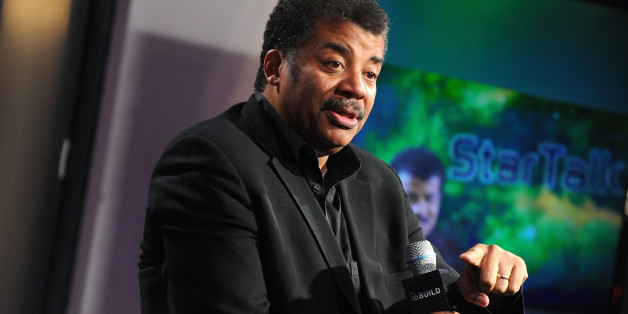
American Education and how we see the future!


See  https://www.facebook.com/HuffPostScienceTech/videos/10154086208461083/

The Future can be better when we think!

The Future is worse when we do not think!

America become great via "Yankee Ingenuity"!  Now, people promoting, "Make America Great", are mostly folks who disparage science and thinking.  

Education should not be about filling students heads with facts, it should be about giving students some tools so their curiosity and drive to explore allows them blaze a path to a better world.  Education is about opening student's eyes so they can see the world around them.  Not just looking at at what is around them, but actually seeing and understanding it.

Not withstanding the Louisiana Purchase and Alaska, America did not become great by doing deals; rather America become great by accepting reality, seeking to understand reality, and working together.  Chinese, Polish, Italian, Jewish, and Irish immigrants were all disparaged, and discriminated against; and all helped to build a greater America than would have been possible without those waves of immigration bringing new blood and new ideas to the American process. 

Trump Tower would be impossible without the work of a Polish immigrant; Charles Proteus Steinmetz.  America could not have won WWII without the work of  immigrants (e.g., http://www.vanderbilt.edu/AnS/physics/brau/H182/Term%20Papers/Eric%20Weiss.html ).  America could not have settled Kansas or Texas without Irish working in the steel mills or laying track.  The wealth of California was made possible by rail roads built with Chinese labor. The railroads fed America's East Coast cities including Boston, NYC, and Washington, DC.  You cannot point to anything that has made America great that was not helped along by immigration.

I am not an advocate for immigration, I am a advocate for the truth.
The scientific method, which underpins these achievements, can be summarized in one sentence, which is all about objectivity:

Do whatever it takes to avoid fooling yourself into thinking something is true that is not, or that something is not true that is.

This approach to knowing did not take root until early in the 17th century, shortly after the inventions of both the microscope and the telescope. The astronomer Galileo and philosopher Sir Francis Bacon agreed: conduct experiments to test your hypothesis and allocate your confidence in proportion to the strength of your evidence. Since then, we would further learn not to claim knowledge of a newly discovered truth until multiple researchers, and ultimately the majority of researchers, obtain results consistent with one another.

This code of conduct carries remarkable consequences. There’s no law against publishing wrong or biased results. But the cost to you for doing so is high. If your research is re-checked by colleagues, and nobody can duplicate your findings, the integrity of your future research will be held suspect. If you commit outright fraud, such as knowingly faking data, and subsequent researchers on the subject uncover this, the revelation will end your career.

It’s that simple.

See https://www.facebook.com/HuffPostScienceTech/videos/10154086208461083/


http://www.huffingtonpost.com/neil-degrasse-tyson/what-science-is-and-how-and-why-it-works_b_8595642.html

Friday, May 13, 2016

Vacation time and knitting kits

A kit for summer vacations including camping and runs up to experience Shakespeare at Ashland. Technique is more "Dutch Knitting Stick for stiff needles", than the much faster spring / gansey technique used for large expanses of fabric. These needles/knitting sheath are not much faster than a leather knitting belt but, this knitting sheath is more compact and better for travel than a knitting belt.


.

The needles are short enough to be used anywhere, and this model of knitting sheath can be used everywhere. This sheath can also be used with glover's needles or swaving pricks. The needles are US0 or ~ 2 mm allowing knitting 6-strand, 840 ypp yarns in low light situations.


A kit for knitting at home and around town. These needles are US000 or ~1.6 mm.


Snug socks look better, but tight socks wear faster. Thus, "one should knit to fit!" However, using a tape measure or ruler or rule of thumb, it is hard to get to get an exact measure of the sock. I make "story boards" that are the exact size of that person's foot, and when the story board fits, the sock fits. The notch tells me the height of the heel, and the round hole tells me where to begin decreases for the toes. Kit used with four-ply to 6-ply gansey yarns in the 2,500 to 1,600 ypp range. Good socks can be knit on 12" needles using 3 plus 1 needles, with sweaters for BIG men knit on 6 plus 1 of the 12" needles. With dark yarns in low light situations, distinct expletives will occur.


See also the work of Ben Crystal, and his father David, on Shakespeare in original pronunciation. (Actually, SF Bay Area has more OP Shakespeare than Ashland.)

https://www.hayfestival.com/p-8985-david-and-ben-crystal.aspx?skinid=16 

(Allows knitting while listening.) Shakespeare begins at minute 35 +, but the first 35 minutes give background, and the rest ties it to Shakespeare.  Shakespeare is full of rhyme and pun; it is fun!

https://www.youtube.com/watch?v=gPlpphT7n9s


https://www.youtube.com/watch?v=qYiYd9RcK5M


http://www.npr.org/sections/monkeysee/2012/03/24/149160526/shakespeares-accent-how-did-the-bard-really-sound


http://vashakespeare.org/2015/10/the-once-and-future-shakespeare-a-lecture-by-ben-crystal/


http://www.theguardian.com/books/2012/apr/20/audiobooks-shakespeare


http://muviza.net/watch?v=9FF5K8VlcRI


http://originalpronunciation.com/


Wednesday, May 04, 2016

Models

Dr. Long was a very elegant and refined Senior Professor. He could make a stick of chalk last for weeks. Then, he wrote 4 lines on the blackboard.


Define the Model
Bound the Model
Calculate the Equations of State
Calculate the Gibbs Free Energy

As he lectured on, he put stars in front of the lines as he spoke :

  • Define the Model
  • Bound the Model
  • Calculate the Equations of State
  • Calculate the Gibbs Free Energy
Then, he retraced and bolded each line:
  • Define the Model
  • Bound the Model
  • Calculate the Equations of State
  • Calculate the Gibbs Free Energy
Anyway, he went through about 3 sticks of chalk in that hour, but I still remember it after 46 years. Of course, there was a period when I used it every day.  I modified it to;


Define the Model

Bound the Model

Calculate the Equations of State

Calculate the Gibbs Free Energy

Calculate Fate and Transport

Calculate Biological Interactions and Transformations

Calculate Dose and Toxicology

Calculate Affected Populations

Calculate total damage to humans and infrastructure


After that, I could walk around any Bechtel office at night, in my stocking feet, and the only comment was an awed, "You worked for SN!"


Climate science does not bother with the whole list these days. see for example
New use of global warming potentials to compare cumulative and short-lived climate pollutants by
Myles R. Allen, Jan S. Fuglestvedt, Keith P. Shine, Andy Reisinger, Raymond T. Pierrehumbert & Piers M. Forster Nature Climate Change (2016) doi:10.1038/nclimate2998  Published online 02 May 2016

They do not define the model; not for SLCPs, GWPs or GTPs. They do not bound the model. They excluded oceans, wetlands, and all of their contained biology, but there is no formal boundary. Since they are working in a single phase, they do not bother to calculate biological transformations. They do not bother to calculate equilibriums between aqueous and vapor phases, or between aqueous and solid phase (e.g., clathrate).  Bad chemistry! On the other hand, much of the climate system is not at equilibrium!  On the other hand, climate science does consider the atmosphere to be "well mixed" so there is an assumption that the system is not too far from 
equilibrium.  Planetary motion both mixes the system, and keeps the system out of equilibrium.

This lack of lack of modeling rigor has allowed the IPCC to consistently understated the risk and extent of climate change. I say the current under-statement is about 38% - with interest compounded second by second.  They invoke some kind of magical "half-life" for SLCPs but do not define the reaction, its mechanism, its state, or its Gibbs Energy.


One point is how they treat CH4 as a greenhouse gas. In the short term, methane is ~86 times powerful than CO2 as a greenhouse gas.  However, CH4 is more reactive and has a much shorter lifespan in the atmosphere than CO2, or does it? Does methane deserve to be given a global warming potential (GWP) of only 24 for climate modeling?

In the atmosphere, methane is oxidized by OH- and Cl- radicals, while CO2 is not. On the other hand, CO2 is converted by plants and algae into O2 plus biomass. In aqueous environments, CH4 can be produced and metabolized by various bacteria, at material flows much greater than the “rate limited” atmospheric oxidation process.  On the other hand, CO2 is more soluble than CH4 in water, and thus CO2 can disappear out of the atmosphere into the oceans (and then reappear.) Thus, the actual amount of CO2 and CH4  in the biosphere is controlled by biological processes that respond greatly to temperature, oxygen concentration, and other environmental factors.  However, the IPCC tends to be dominated by Atmospheric Chemists and Computer Modelers that accord Biologists second class status.  In contrast, I tend to think in the terms of equilibriums controlled by Equations of State, Gibbs Energy,  and most importantly -- Biology. And everything published by the IPCC is reviewed by lawyers and governments that desire to avoid public panic.

If we consider solubility, then when equal pulses of CO2 and CH4 are added to the atmosphere, much of the CO2 will go into the oceans, so the actual near term effect of  the residue of CH4 pulse in the atmosphere is on the close order of 260 times more powerful than the  actual near term effect of the residue of the CO2 pulse in the atmosphere.  

And, as we consider sequestration, we much remember that both CH4 and CO2 are in the oceans, and will come out as the partial pressure of these gases in the atmosphere decreases. As we plan to take greenhouse gases out of the atmosphere, we need to plan for the gas that will come out the oceans. Or, the biological processes in the oceans can convert either or both gases into biomass, thereby reducing their concentration(s) in the oceans, and causing the gas(es) to move from the atmosphere into the ocean. The ocean may be the easy path to sequestering carbon out of the atmosphere.

If we look at the observed CH4 levels in the atmosphere (http://www.esrl.noaa.gov/gmd/ccgg/trends_ch4/#global_data) we see that the CH4 concentration in the atmosphere goes up, not down as would be expected with a defined half-life on the order of 10 years. Looking at the CH4 bump in the atmosphere after the oil well fires of 1991, there is a decline that looks to my eye like a higher partial pressure in the atmosphere coming into equilibrium with the dissolved CH4 in the oceans/wetlands.  And, the bump in 1997, looks like higher ocean temperatures from El Nino reducing the solubility of CH4 in the oceans, so CH4 partitions into the atmosphere, then returns to the oceans as cold, deep water is exposed.

Part of the problem here is that many Environmental Scientists took general chemistry and were taught that CH4 is “not soluble” in water.  In fact, CH4 is soluble in water at a few parts per thousand. Thus, in the context of CH4 at a few parts per million in the atmosphere, the oceans can and do hold a great deal of dissolved CH4 in solution, and the bacteria in the oceans can produce a lot of CH4 as O2 concentrations diminish and temperatures rise. (in the same way, green plants algae and bacteria can reduce large amounts of CO2 (e.g., CO2=> biomass + O2) , but CO2 reduction is discounted by the IPCC.)

At the surface, CH4 in the ocean is in equilibrium with the atmosphere (resulting in a very small flux across the phase boundary). In deeper colder water, the partial pressure of CH4 in the water is in equilibrium with the clathrates at the sea floor.  As the world’s waters warm,  CH4 will move from the surface waters into the atmosphere, and  clathrates will dissolve into the bottom waters.  (Or, as we have started to observe in the last 20 years, even release CH4 into the atmosphere.)

Anyway, all of this means that we have to model CH4 in the atmosphere as if the current concentration of  CH4 will be in the atmosphere for at least 20 years.  Thus, the CH4 as equivalent CO2 is  ~160 CO2e.  Add in the real CO2 (405 ppmv), and greenhouse forcing is  currently 565 CO2e, yielding a forcing of ~ 3.6 W/m^2.  Given that permafrost and clathrates have already warmed enough to start melting/decomposing, a climate sensitivity number as high as 3 seems justified. That would indicate an expected temperature from global warming at current conditions on the close order of 10.8C.  That is well above IPCC estimates. And, it is now! Waters that were in the tropics 50 years ago, are releasing heat in the Arctic now.

Fifty years ago, the forcing was only 2.6 W/m^2 (assuming CH4 GWP = 86), while today, the tropic waters are forced at 3.6 W/m^2, and waters that are in the tropics now,  will be releasing that (38% more) heat in the Arctic in 50 years.

Some would object that the forcing formula is standardized for a period of 100 years.  I would counter that with 560+ CO2e, over the next 20 years enough permafrost and clathrates will decompose to raise greenhouse forcing to a much higher level. Over the longer term, expecting the clathrates in the bottom of the ocean to remain solid is like expecting the ice in your tea at a Houston, Texas BBQ party to stay solid. As the tea warms, the ice will melt.  As the oceans warm, the clathrates will decompose. If we are seeing large scale clathrate decomposition 50 years, then there will be a great deal more CH4 in the atmosphere in the second half of the 100 year period, and this kind of senario is simply not recognized by the IPCC.

A corollary is that  polar ice will “melt” faster than the current generation of models predict.  I suggest that the older ice flow models using Navier-Stokes/conservation of momentum equations, miss the point that -- ice near its melting point becomes highly discontinuous.  In particular, ice fractures can concentrate stress from large volumes of ice into melt energy in tiny volumes at the propagating edge of  fractures.  Likewise, moulins and hydro-fracture processes disrupt “momentum” ice flow models. Any model of ice at its melting point expressed in differential equations expressed in differential equations will fail chaotically at the discontinuities. And, we have reached the point where there is liquid water at both the top and bottom of many ice structures meaning that top and bottom surfaces are at their melting point/ discontinuities. Where there are moulins and hydrofractrue events, the discontinuities extend through the ice from top to bottom, and the ice models must fail.  Ice sheets do not have to melt in place.  Now we know, that most ice can “fall” into fjords or the ocean and float away.  All that it takes is enough warming to weaken the ice so that it fails under the stresses imposed by the weight of the ice. My best guess on sea level rise is meters in decades.  NOAA has started to report similar estimates. (E.g., https://www.kcet.org/redefine/sea-level-rise-could-come-much-sooner-than-you-think , http://www.insurancejournal.com/news/national/2016/04/12/405089.htm , )

The sea water advecting heat into today’s Arctic was warming in the tropics, decades ago.  Most of the heat in the biosphere is in the oceans, but most climate scientists look at the temperature of the atmosphere for a reading on the state of the climate.  This disregards the heat that goes into warming and melting ice.  This disregards the heat that goes into the oceans.

There is a significant lag time in climate systems.  We could stop burning fossil fuels today, and it would be 50 years before warming stabilized. We could stop burning fossil fuels today, and it would be centuries before the sea floor clathrate and atmospheric methane inventories stabilized. If oxygen levels in the oceans decline, then the biomass in the oceans will be converted to methane, and the equilibrium value for methane in the atmosphere could be high.  These are issues not addressed by IPCC models.

I did computer modeling for Dr. Jay Forrester for the Club of Rome Report that became Limits to Growth by Meadows et al (1972).  Much later, I wrote the Bechtel Risk Management Manual as we considered the full range of very large nuclear facility and hazardous waste site issues.  We were trying to price the decontamination, demolition, and waste disposal projects being offered to us.  For a long time, I kept a list of the 300 worst things that could happen on large, long term projects, such as the Hanford Waste Repository with its 100,000-year design-life, and potential to contaminate the Columbia River with hazardous and radioactive materials.  Along the way, I worked on a number of the worst hazardous waste sites in the world, and did fate and transport analysis of how bad stuff could affect populations; now, in the future, and in the deep future.

Risk actually has 3 components; Likelihood of the event,  intensity or damage from the event, and the likely timing of the event.  Life is a sequence of risks, and sometimes resources must be allocated sequentially. For example, the sun will die, causing great damage to Earth Bio systems, but that is in the deep future, and we should address other risks first.  Super volcanos and large asteroids can inflict great damage, and are very likely risks in a time scale of a million years, but AGW is a similar risk in the time frame of a few of decades. We should address AGW first, so we will be around to worry about super volcanoes as they will  appear.

At this time, the likelihood of AGW is near certain. (my estimate is 99.9999999%)  Given the  current concentrations of greenhouse gases in the atmosphere and oceans, likely warming is almost certainly catastrophic for most animals over 4” in length.  We have already seen more than a degree of AGW, which means that water vapor in the atmosphere has increased and is now acting as a greenhouse gas. This will warm the oceans faster, lowering the solubility of CH4 and CO2 in the oceans, and increasing the amount of greenhouse gases in the atmosphere. Thus, AGW is a global risk, a catastrophic risk, a near certainty, and a very urgent risk.

In addition, AGW carries with it a spectrum of follow-on effects of unknown impact and unknown level of warming  required to trigger the impact. These include spread of diseases such as  Lyme and Zika.  Changes in climate faster than agriculture can adapt resulting in large scale crop failures (e.g., drought) .  Loss of important ecosystems as a result of migration or extinction of keystone species.  (Ghost forests in California) Weather that routinely damages engineered infrastructure.  Weather that damages important resources. Weather that kills national populations (https://en.wikipedia.org/wiki/2010_Northern_Hemisphere_summer_heat_waves,  https://en.wikipedia.org/wiki/2011_North_American_heat_wave , https://en.wikipedia.org/wiki/Summer_2012_North_American_heat_wave ,  https://en.wikipedia.org/wiki/2013_heatwave_in_Ireland_and_the_United_Kingdom   , http://www.climatecentral.org/news/australia-2014-heat-wave-picks-up-where-2013-left-off-16938 ,  https://www.climate.gov/news-features/event-tracker/india-heat-wave-kills-thousands ) have become routine. I assert that AGW and resulting drought beginning circa 2006  was an important factor in the Syrian situation.  The drought in Thailand and India looks much like the recent droughts in Texas and California.

Weather is a heat engine, and heat is fungible. All heat affects all weather.  All weather is affected by all heat.  Attempts at attribution are silly.  The heat from AGW is in the system, and is affecting all weather.  It is in the nature of greenhouse gases that as they heat the lower atmosphere, they cool the upper atmosphere, making the atmosphere less stable and much more prone to violent weather.  And, cold air above warm moist air makes large snow and hail storms more likely. 

It is very like the risk faced by the Elephant's Child in Kipling’s story after the Crocodile's musky, tusky mouth caught the Elephant's Child by his little nose. At this time we should take the Bi-Coloured-Python-Rock-Snake’s advice, and immediately and instantly, pull as hard as ever we can, to avoid being jerked into yonder limpid stream (by which I mean AGW) before we can say Jack Robinson.  Like the Elephant's Child, we have been reckless and naïve.   We may survive, but like the Elephant's Child, the effort required will stretch us, and change our outlook in every way. 

http://www.boop.org/jan/justso/elephant.htm
cumulative and short-lived climate pollutants
Myles R. Allen
1,2
*
, Jan S. Fuglestvedt
3
, Keith P. Shine
4
, Andy Reisinger
5
, Raymond T. Pierrehumbert
2
and Piers M. Forster

Sunday, May 01, 2016

Better Knitting sheaths

The usefulness of a knitting sheath depends on many things, what one is knitting, the chosen technique, and what one is wearing.  It also depends on the posture; sitting (lounging) in my  yellow leather chair in front of the TV offers a different posture than sitting in a straight backed chair, or the seats in my wife's car, or in the kitchen chairs.  A specialist, who knits in one chair, wearing business clothing, can have one specialized knitting sheath.  I have spent much of the last couple of years lounging in that big yellow chair wearing a sweat suit, leather apron, with a wide leather belt and a knitting sheath - and it was good knitting but it was never just right.  The knitting sheaths wanted a more upright posture - like the one in the kitchen chairs.

Then, recently we visited friends at Textures in Santa Monica.  My knitting perch there is a bar stool that enforces proper posture.  For that travel project, I had summer boot socks from a 6-strand cabled, worsted weight yarn, knit on 2 mm needles to produce a 7 spi by 9 rpi fabric, and I really wanted a better knitting sheath.

Even with a knitting sheath, it is a significant effort to produce that density of fabric with 6" or even 9" sock needles.  Oh, it can be done, but it is an effort. However, with 12" needles, it becomes routine knitting.

Thus, I needed a knitting sheath that allowed use of 12" needles, when traveling - when wearing jeans or Dockers, and the belt holding my knitting sheath goes through the belt loops.  This brings me back to my often repeated statement the the hardest part of using a knitting sheath is learning how to keep it in place.  I needed a knitting sheath that would always in the right place when used with a belt at the height of jeans belt loops.

There were a lot of prototypes and mis-steps:
In baby steps, I got to:
These thread onto the belt, so they are not lost in transit, and the 6" can be flipped to work with 6" sock needles or 12" "gansey needles" or 6" swaving needles.  The 4" version works with 6" sock or swaving needles and with the needle adapter at the bottom, works with 8" to 10"  DPN.


With the needle adapter angled out a bit, this style of knitting sheath provides the same spring effect knitting as 18" gansey needles with the knitting sheath over the right buttock.  Knitting while sitting on a bench, the long needles are still faster, but in with most modern seating, having the knitting sheath under the right elbow provides better access, and hence is faster.

The parts are fairly simple once one thinks it though :

However, this is not the end.

We can change the form-factors a bit so that needle adapters work as as tightening knobs:
This knitting sheath now works very well for either 2 mm or 2.25 mm needles in either 12"  or 6" lengths, including swaving pricks, I think one knitting sheath that works well with 6 different kinds of needles is neat.  If you remember, when I first worked with goose wings, I was very impressed  with the power of the knitting technique where the goose wing rocked on the tip of the hip.  A very similar technique emerges from this knitting sheath by loosening the tightening knob so the shaft holding the needle adapter can rotate, providing a rotating fulcrum for the needle.  Thus, this knitting sheath can support swaving, spring needle techniques, and rotating fulcrum techniques.  Using a softer belt or loosenting the belt slightly, the Dutch knitting stick techniques can be used.  I never had one knitting sheath that could do all that, as well as these do.


These knitting sheaths are smaller and less bulky than a knitting belt.  In the context of a casual belt through the belt loops of  jeans or Dockers, they are much less noticeable than a leather knitting belt. And, while a knitting  belt is less likely to damage wooden or tubular needles, it will never provide the speed and power of a knitting sheath. Leather and horse hair simply does not withstand the force of  steel needles used as springs. And, knitting belts do not support swaving.

Four knitting sheaths set up for swaving socks. The two traditional designs (goose wing and Durham)  on the left, are fine for sitting and working, but are a nuisance if one is out and about.  Note that  the current design is less bulky, but just as stable or even a bit more so than the traditional designs.


Notwithstanding all of the above, today is May Day, and I am wearing shorts with their belt loops in slightly different locations than jeans or Dockers.  Knitting in the garden, on the straight backed patio chairs, the best knitting sheath I can find for 12" by 2 mm needles is the new style short knitting sheath.  This for blunt needles being used with a spring technique, for a fine gansey fabric of  140 stitches per square inch.


Sunday, April 17, 2016

Mother Nature

One of my favorite scenes in Wagner is Wotan accepting the will of Erda. Yes, even the most powerful of the gods must obey "Mother Earth".

Most "scientists" dismiss me when I invoke Mother Nature, and that is silly, for we must obey "Mother Nature".  Here, I am going to suggest that a good number of my readers go back and read
(or reread) the first 10 of the Feynman Lectures .  Those remind us of how scientists think and work (or should think and work).  Too many of us rely on what some grade school teacher told us about how scientists think and work.  Now think!, did that teacher discuss data quality at the time? If not, there were problems with the teacher's data. The first 10 Feynman lectures are about how real scientists work out difficult issues.  Those lectures explain why no object can be precisely defined, why all data is imperfect, and how to tell if a particular set of data is good enough.

Mother Nature uses the math of probability, calculus, equations of state, finite element analysis,  catastrophe theory, and quantum mechanics to tell us what is likely. She imposes the forces of  gravity, and electromagnetic radiation on us within the constraints of thermal dynamics and rotational dynamics (including the orbital mechanics that give us ice ages, seasons, and tides). She sets the properties of matter and plasma, and the conditions when those properties change. She sets the biochemistry of life. We can calculate Pi to a trillion decimal places, but we cannot change it.  We can measure the size of a neutron, but we cannot change it. We can calculate gravity to one part in a billion, but we cannot say how gravity is different from the forces that hold a neutron together.

Invoking Mother Nature is a good shorthand for all of this.  It is a good shorthand for the fact that we need to be doing all the math, all the time, or we will miss part of what Mother Nature is telling us. (Richard Feynman was very good at math and he spent a good bit of time doing math.)

Setting Mother Nature as a cool entity of  math allows us to forget her power. She  lets us make nuclear bombs and wipe out species with abandon.  She will indifferently allow us to wipe out our  own species. She has reminded us, that with all of our ability to destroy species, we have a hard time dealing with Zika viruses,  Lyme disease,  MSA, cockroaches,  termites, volcanoes, or tornadoes and hurricanes -- much less global climate change. We have more hubris than power.

I think the scientists that dismiss me when I invoke Mother Nature are not doing the necessary math on a timely basis to understand the consequences of  human caused global warming.  They think humans are special, and Mother Nature will not enforce her rules.  Trilobites were special and they are gone. The big dinosaurs were special and they are gone.  That is why Mother Nature states her rules mathematically - those rules are are mathematically precise and are always enforced.

Climate models pass for doing math in climate science.  Just as a camel is a horse built by a committee, climate models are computer programs built by committees in an environment where there are large numbers of students and many echo chambers.  The number of students ensures that nothing too unpleasant is said, and that nothing too rigorous and time consuming is done.  I mean that one cannot have college students running climate models that predict the end of civilization within the  career of the student - the whole university community would need trauma counselling.

And yet, any kind of a reasonable model of seafloor clathrates in a warming ocean would have to include a fat tailed probability distribution of methane releases from the sea floor.  Some of those fat tailed probability distributions of methane releases would be at catastrophic levels, so the entire concept of  methane releases from sea floor methane clathrates is left out of the climate models.  As is also carbon dioxide from thawing permafrost.  This is not doing math, this is pulling the covers over our head to keep the monsters in the dark away.

Even the math that the climate models do, does not stand up to scrutiny.  Methane is about 86 times more powerful as a greenhouse gas than carbon dioxide on annual basis.  However, methane degrades in the atmosphere over time so over a period of 100 years, methane is only 24 time more powerful as a greenhouse gas.  The climate models set a time frame of  100 years and use the lower value as the CO2 equivalent of  CH4 over the entire time frame. However, climate change is a non-linear feedback system with later conditions dependent on earlier conditions. (See Jay Forrester's work on systems dynamics)  In a non linear feedback system, each time period must be calculated with the appropriate values for that time period, or subsequent time periods will be affected. Therefore this use of average methane  to CO2   equivalent is a catastrophic bug in the program.  Moreover, the assumption of declining CH4 concentrations in the atmosphere has NOT been observed in 27 years of CH4 monitoring.  I can think of several good chemical explanations, but the point is that the observed conditions  do not fit the conditions assumed in the climate models - and that is a deep failure of the climate models.

Review papers such as  Steve's  missed these catastrophic bugs in climate models. The methane/ carbon dioxide equivalent error is just one of several bad bugs in the science coded into the models. The models were written as tools to study narrow aspects of climate change, and not to predict the over-all effects of climate change. To use the current climate models to estimate climate changes from carbon emissions is a misuse of the models. (e.g., temperature rise and carbon budgets for treaties)  Even, to use the models to estimate effects of known climate forcing on human society is a misuse of the models.

This one methane / CO2 equlivalent issue means that the Earth is likely warming  ~35% faster than the climate models predict as a result of this one bug.   There are other problems with the climate models.   Consider:

 https://robertscribbler.com/2016/04/15/conditions-promoting-the-arctic-sea-ice-collapse-are-exceptionally-strong-this-spring/

http://neven1.typepad.com/blog/2016/04/beaufort-quick-update.html

http://www.climatecentral.org/news/earth-sees-11-record-hot-months-20254

http://thinkprogress.org/climate/issue/

http://climatenewsnetwork.net/antarctic-may-melt-far-faster-than-thought/

http://neven1.typepad.com/blog/2016/04/winter-analysis-addendum.html#more

http://climate.nasa.gov/blog/2416

http://bogology.org/2016/01/22/frozen-peatlands-in-warming-world/

https://tamino.wordpress.com/2016/04/17/co2-status-report/

The take away is that climate scientists are very surprised that climate change is unfolding much faster than they expected, despite many thousands of  climate model runs to establish boundary conditions.

All of the information in the sites listed above should have been expected if we had honest climate models. If we had honest climate models, the 2007 and 2012 Arctic Sea Ice melt events should have been expected.  The record  heat waves of the last decade ( including the July 2012 GIS melt event) should have been expected from honest climate models -- that appropriately accounted for current forcing from methane.  And, the evidence of increasing carbon feedbacks would have been anticipated.  In a system of nonlinear feedbacks, that last is a critical and urgent issue.

Honest climate models might well have resulted in a climate agreement 20 years earlier.


Tuesday, April 12, 2016

Tapistries

I mentioned a while back that the Getty Center was having a exhibit of tapestries made gold and silver yarns.  However, I have not said anything substantive about the exhibit.

I was totally under whelmed by the associated materials.

For example, why tapestries?  Conventional wisdom is that they reduced the drafts and made stone buildings feel warmer and more comfortable.  Perhaps, but shuttle woven blankets would have done that and been much more practical.  In particular, the dyes in the tapestries tended to fade rapidly, and tapestries could  not be cleaned as easily as blankets to remove soot and smoke. Why gold and silver in tapestries? We are told it was to improve interior light, but the gold conducted heat through the fabric, allowing moisture to condense on the warmside, thereby requiring use of silver to act as an antifungal agent to keep the tapestry from mildewing and molding.  However, silver tarnished, reducing the reflectivity of the tapestry. No, when they had a practical need for more light, they used white marble as a wall facing as done in the rooms used for spinning fine thread in Bruges.

I assert that tapestries primary purpose was as displays of wealth and status. They were very valuable, but they were lightweight and compact. An 12' by 18'  wool and silk tapestry might weigh only 10 pounds (30 pounds with a linen backing).  It could be folded up and easily transported, or stored away somewhere safe. However, a tapestry was harder to steal than gold or silver per se, and not as threatening as weapons or armor.  Tapestries were a store of wealth that could be displayed  to all of one's guests.

Tapestries came in different grades. The exhibit contains a pair, both made to a similar cartoon by the same shop in Paris. The one for the King of France was much larger and much more finely worked with much gold (and silver).  I estimate the grist of the weft in the smaller tapestry to be in the neighborhood of 5,600 ypp, while the grist of the weft in larger tapestry was closer to 15,000 ypp. Thus, the yarn in King's tapestry took on the order of  100 times more effort to spin without counting the large effort to core-spin the gold and silver onto the weft.   Many of the tapestries that were less finely spun and had less gold work, had the gold work protruding slightly from the surface of the tapestry.  At first, I though this was a lack of craftsmanship.  However, reflection tells me that this was a design feature, to make sure that everyone saw that the tapestry did have gold in it.  The gold protruding from the surface, made reflective bands that were visible from any angle and at a greater  distance -- than the much finer work in King's tapestry where the finer gold work produces a more uniformly lustrous field.

At first, I was very impressed with the quality of the English spinning and disappointed with the quality of the spinning in Paris, but then it became very clear that what mattered was the rank and wealth of the person ordering the tapestries, and not where they were made.  Likely, elite craftsmen went to where the wealthy were ordering new tapestries. It was a uncommon set of skills that took a long time time to develop and refine.

Anyway, the exhibit runs to May 1, and it is likely the only place we will ever be able to do such a close comparison of such a range of fine tapestries.

http://www.getty.edu/visit/cal/events/ev_566.html

 Remember the Huntington collection is also nearby.


YAKS


Specialized: for 12" sock needles and a belt around the waist as defined by jeans. It works for an over stuffed chair, or knitting in the car as my wife drives.  With 6 needles, it works for sweaters, but has the spring action and speed of long gansey needles. It does not fall out and get lost, when out and about.  Is it different?  Only by fractions of a millimeter, and that makes it better for some specialized purposes.

Given modern a costume of jeans, I would say it has taken me a long time to spiral toward an optimum knitting sheath design. It attaches to a belt as used in modern pant design, it allows use of long (12") needles, and it does not get lost when one is out and about.

Mostly, knitting sheaths allow me to knit  objects from fabrics that I would not consider with hand held/ circular needles.  Note that I did not say that circular needles are bad, only that I do not consider them as practical tools for some objects knit from some fabrics.

The sock fabric above is good for hiking socks. It is a 6-strand cabled, 840 ypp yarn knit on 2 mm needles at 7.6 spi and 10 rpi for 76 stitches per square inch.  That fabric can be knit on circular needles, but the progress will be slow and arduous.   I like fast and easy knitting.


Note that this knitting sheath also fits the 1.6 mm needles that I use for other sport socks knit at 11 spi and 13 rpi for 142 stitches per square inch from 6-strand cabled 1640 ypp sock yarn.


And, I use the 12" - 2 mm needles for sweaters these days, so it is has become my work-a-day knitting sheath, and it is not really that specialized - it is worth getting right.