I get teased and chided on for using the traditional spinner's measures. In particular, measuring grist by stating the number of "hanks" of 560 yards that can be spun from a pound of yarn.
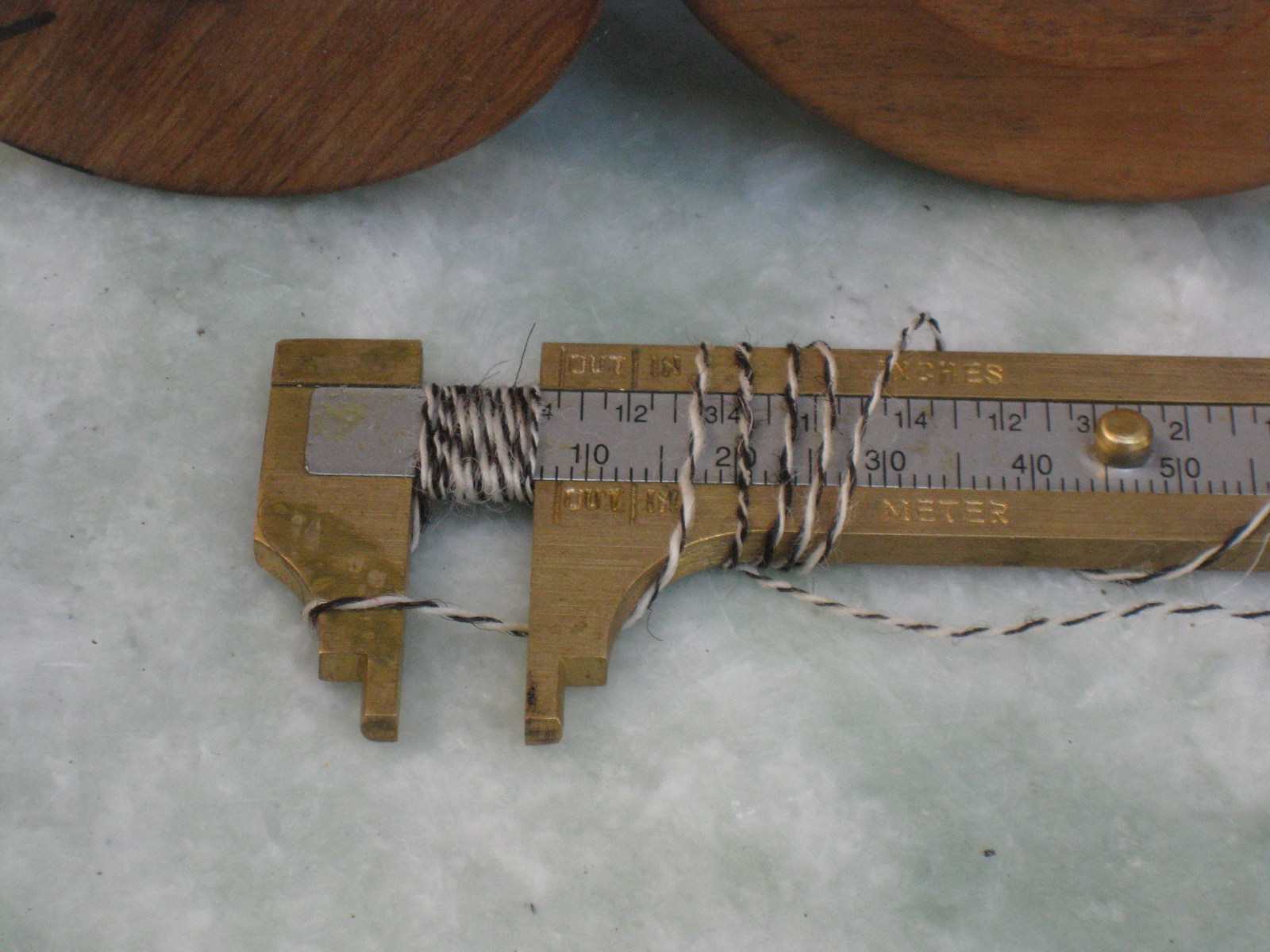
My ordinary grist is "10s". That is 5,600 ypp yarn spun worsted. Thus, I know how many pounds of wool I have, I know how much yarn I can spin. Easy. And, when wrapped to refusal, 10s measure ~75 wpi. A 75 wpi single can be sleyed to produce plain weave at 68 epi/68ppi, which weighs about 1 pound/ square yard. Likewise, 20 hanks per pound produce 2 yards of cloth per pound of wool.
Thus, using hanks, I can easily calculate how much yarn I can spin from a given batch of wool, and how much cloth I can weave from that wool. The more weaving I do, the more useful the old English system of yarn measure is.
This also tells us that the stories we were told in grade school were just that -- stories. The yard and the inch may have been related to some king's reach and size of hand/toe/foot, but he would have lived before the very fine weavers of Classic Greece. They had wool, yarn, and cloth trading, so they had measures that extended from Greece to what is now Turkey and Egypt, to say nothing of the silk road with textiles moving east.
Sorry, Love; but the fine fabrics of Classical Greece were not woven on single beam, warp weighted looms. Oh, I am sure they had such looms, but I doubt if that is what they used to weave 12 meter lengths of 68 epi (and finer) wool fabrics. No, by Classical Greek times, it was an industry, and they were using rather sophisticated horizontal double beam looms. And there was trade. With trade, there were terms to define the various aspects of textiles. You may not name your yarns, but merchants do; now and in the past. They give them names like "45 grams / meter, white worsted single" or white "40s".
I expect that the definitions of (or other words that indicate the same quantity): hank, yard, inch, pound, wool fineness in hanks per pound, ends per inch, pricks per inch, woolen, and worsted, were all set, and known among textile traders by the end of the Greek Classical era. In particular, the elegance of the hanks of yarn at 560 yards tied to fineness wool and the math of wraps per inch suggests the mathamatical acumen of Syracuse in classic times.
The fact that we have variations such as the el as a measure of length, suggests that textile measures have been around long enough for dialects to develop. For the larger, and well nourished Greeks, 36 inches was a reasonable width for a warp. During some periods in the textile centers of Europe, there was famine, and people were smaller, so a narrower warp allowed much easier weaving. Thus, during periods of famine, Europeans needed a name for narrower cloth, e.g., the el.
Yards, inches, pounds, and hanks were not isolated measures, but part of an intricate system of measure, essential to a large, profitable, international industry and systems of trade. In systems that goes all the way from from wool fiber to yarn to finished cloth, the old English system with grist and wool fineness in hanks per pound is the easy way to do the math and make sure you get correctly paid.
My ordinary grist is "10s". That is 5,600 ypp yarn spun worsted. Thus, I know how many pounds of wool I have, I know how much yarn I can spin. Easy. And, when wrapped to refusal, 10s measure ~75 wpi. A 75 wpi single can be sleyed to produce plain weave at 68 epi/68ppi, which weighs about 1 pound/ square yard. Likewise, 20 hanks per pound produce 2 yards of cloth per pound of wool.
Thus, using hanks, I can easily calculate how much yarn I can spin from a given batch of wool, and how much cloth I can weave from that wool. The more weaving I do, the more useful the old English system of yarn measure is.
This also tells us that the stories we were told in grade school were just that -- stories. The yard and the inch may have been related to some king's reach and size of hand/toe/foot, but he would have lived before the very fine weavers of Classic Greece. They had wool, yarn, and cloth trading, so they had measures that extended from Greece to what is now Turkey and Egypt, to say nothing of the silk road with textiles moving east.
Sorry, Love; but the fine fabrics of Classical Greece were not woven on single beam, warp weighted looms. Oh, I am sure they had such looms, but I doubt if that is what they used to weave 12 meter lengths of 68 epi (and finer) wool fabrics. No, by Classical Greek times, it was an industry, and they were using rather sophisticated horizontal double beam looms. And there was trade. With trade, there were terms to define the various aspects of textiles. You may not name your yarns, but merchants do; now and in the past. They give them names like "45 grams / meter, white worsted single" or white "40s".
I expect that the definitions of (or other words that indicate the same quantity): hank, yard, inch, pound, wool fineness in hanks per pound, ends per inch, pricks per inch, woolen, and worsted, were all set, and known among textile traders by the end of the Greek Classical era. In particular, the elegance of the hanks of yarn at 560 yards tied to fineness wool and the math of wraps per inch suggests the mathamatical acumen of Syracuse in classic times.
The fact that we have variations such as the el as a measure of length, suggests that textile measures have been around long enough for dialects to develop. For the larger, and well nourished Greeks, 36 inches was a reasonable width for a warp. During some periods in the textile centers of Europe, there was famine, and people were smaller, so a narrower warp allowed much easier weaving. Thus, during periods of famine, Europeans needed a name for narrower cloth, e.g., the el.
Yards, inches, pounds, and hanks were not isolated measures, but part of an intricate system of measure, essential to a large, profitable, international industry and systems of trade. In systems that goes all the way from from wool fiber to yarn to finished cloth, the old English system with grist and wool fineness in hanks per pound is the easy way to do the math and make sure you get correctly paid.




.jpg)